
Botanical Hair + Scalp Care: How to Use Hair Oil
Posted by Cheryl Cryer on Oct 16th 2026
Botanical Hair + Scalp Care: Building a Simple Oil Ritual
Hair care is often treated like a beauty problem to solve.
More growth. More shine. Less breakage. Faster results.
But healthy-looking hair usually starts with something much more basic:
how you care for your scalp, your strands, and your overall routine over time.
At Urban Apothecary, we tend to think about hair care the same way we think about skin care — less about miracle claims and more about consistency, good ingredients, and simple rituals that support the condition and appearance of the hair and scalp.
That is where botanical hair oils can fit.
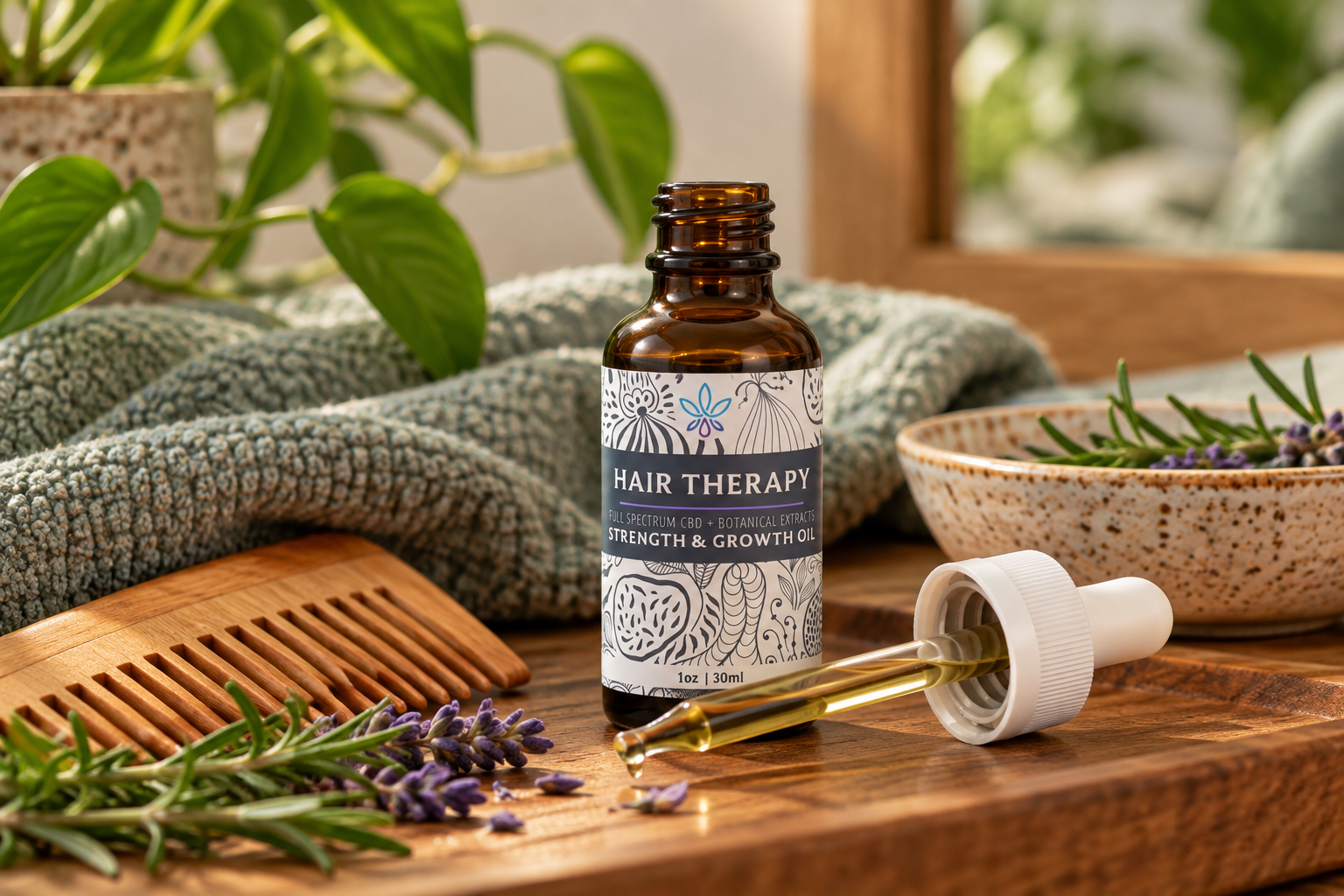
Hair Therapy scalp oil with a dropper, wooden comb, towel, rosemary, and lavender in a natural hair-care setting.
Start With the Scalp
Hair grows from the scalp, so it makes sense to include scalp care in the conversation.
That does not mean you need a complicated routine.
For many people, scalp care can be as simple as:
- gentle cleansing
- avoiding excessive product buildup
- minimizing irritation
- using oils appropriately
- protecting the hair from unnecessary heat and tension
- paying attention when the scalp feels dry or uncomfortable
A healthy hair-care routine should feel supportive, not aggressive.
What Can a Hair Oil Actually Do?
A hair oil can help with the feel, appearance, softness, and manageability of the hair.
Depending on the formula and how you use it, an oil may help:
- soften dry-feeling strands
- reduce the appearance of frizz
- add shine
- condition the scalp
- make hair feel smoother
- create a protective layer on the hair surface
Those are realistic cosmetic benefits.
What we avoid promising is that a topical oil will automatically make hair grow faster, reverse hair loss, or treat an underlying medical condition.
Why Botanical Oils?
Plant oils have been used in hair and skin care for generations.
Different oils have different textures and characteristics.
Some feel lighter.
Some are richer.
Some work well on the scalp.
Others are more useful on the mid-lengths and ends.
The right oil depends partly on hair type, texture, density, styling habits, and personal preference.
The Formula Matters
Just like with topical body care, the front label does not tell you everything.
When evaluating a hair oil, look at the whole ingredient list.
Things worth considering include:
- carrier oils
- botanical infusions
- essential oils
- texture
- scent
- whether the formula is intended for scalp, strands, or both
More ingredients do not automatically mean a better product.
A good formula should make sense for how it is meant to be used.
How to Use a Hair Oil
Hair oils can be used in a few different ways.
As a scalp ritual
Apply a small amount to the scalp and massage gently.
Some people prefer to leave it on for a short period before shampooing rather than keeping a richer oil on the scalp all day.
On the ends
A very small amount can be smoothed over dry or frizz-prone ends.
Start with less than you think you need.
You can always add more.
Before washing
Some people use oil as a pre-shampoo treatment, especially when the hair feels dry.
As part of an evening self-care routine
A scalp massage can also simply be a way to slow down and care for yourself.
That ritual is worthwhile even without attaching a dramatic claim to it.
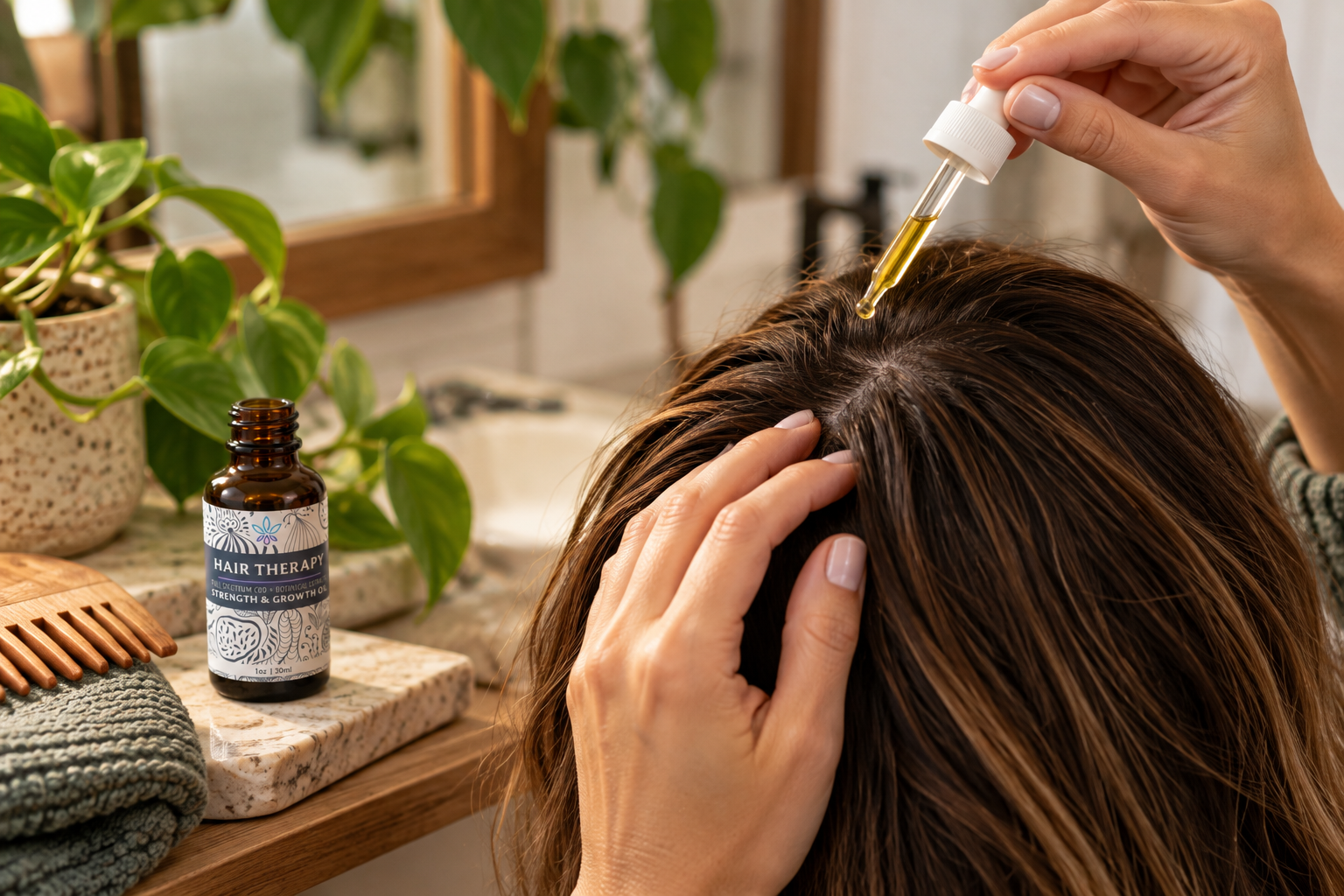
Hands applying botanical hair oil to the scalp with a dropper in a natural bathroom setting.
Hair Type Matters
Not every oil or application method works equally well for everyone.
Fine hair may become weighed down more quickly.
Coarse, curly, textured, or very dry hair may tolerate richer oils more easily.
If your scalp tends to be oily, a pre-shampoo application may make more sense than a leave-on scalp oil.
The best approach is often to start with a small amount and adjust based on how your own hair responds.
What About Essential Oils?
Essential oils are frequently used in scalp and hair formulas.
They can contribute fragrance and botanical character, but they are concentrated ingredients.
That means more is not better.
Essential oils should be properly diluted in a carrier oil, and some people may be sensitive to them.
If irritation occurs, stop using the product.
Can Hair Oil Make Hair Grow?
This is where we want to be especially clear.
Hair oils can support the condition and appearance of the hair and scalp, but they should not be presented as guaranteed hair-growth treatments.
Hair growth and hair loss can be influenced by many factors, including:
- genetics
- age
- hormones
- nutrition
- stress
- illness
- medications
- scalp conditions
- styling practices
If you are experiencing significant, sudden, patchy, or unexplained hair loss, it is worth talking with an appropriate healthcare professional or dermatologist.
A cosmetic oil should not replace evaluation of an underlying concern.
Protect the Hair You Already Have
Sometimes improving the appearance of hair is less about stimulating new growth and more about reducing unnecessary damage.
A few simple habits can help:
- avoid excessive heat
- use heat protection when styling
- minimize tight hairstyles that pull on the scalp
- detangle gently
- avoid overly aggressive brushing
- condition regularly
- protect hair from environmental dryness
That is not glamorous advice.
It is often the most useful.
Hair Care Is a Long Game
Hair changes slowly.
That means a good routine usually requires patience.
Rather than judging a product after one or two uses, pay attention to:
- how the scalp feels
- whether hair feels softer
- whether the ends feel less dry
- how manageable the hair is
- whether the routine is easy enough to keep doing
Consistency matters more than chasing the newest trend.
How We Think About Hair Care at Urban Apothecary
We like botanical hair care because it fits naturally into our broader approach to wellness:
simple ingredients, thoughtful formulation, and realistic expectations.
A hair oil does not have to promise dramatic growth to be useful.
It can simply be something that helps the hair feel softer, the scalp feel cared for, and the routine feel intentional.
That is enough.
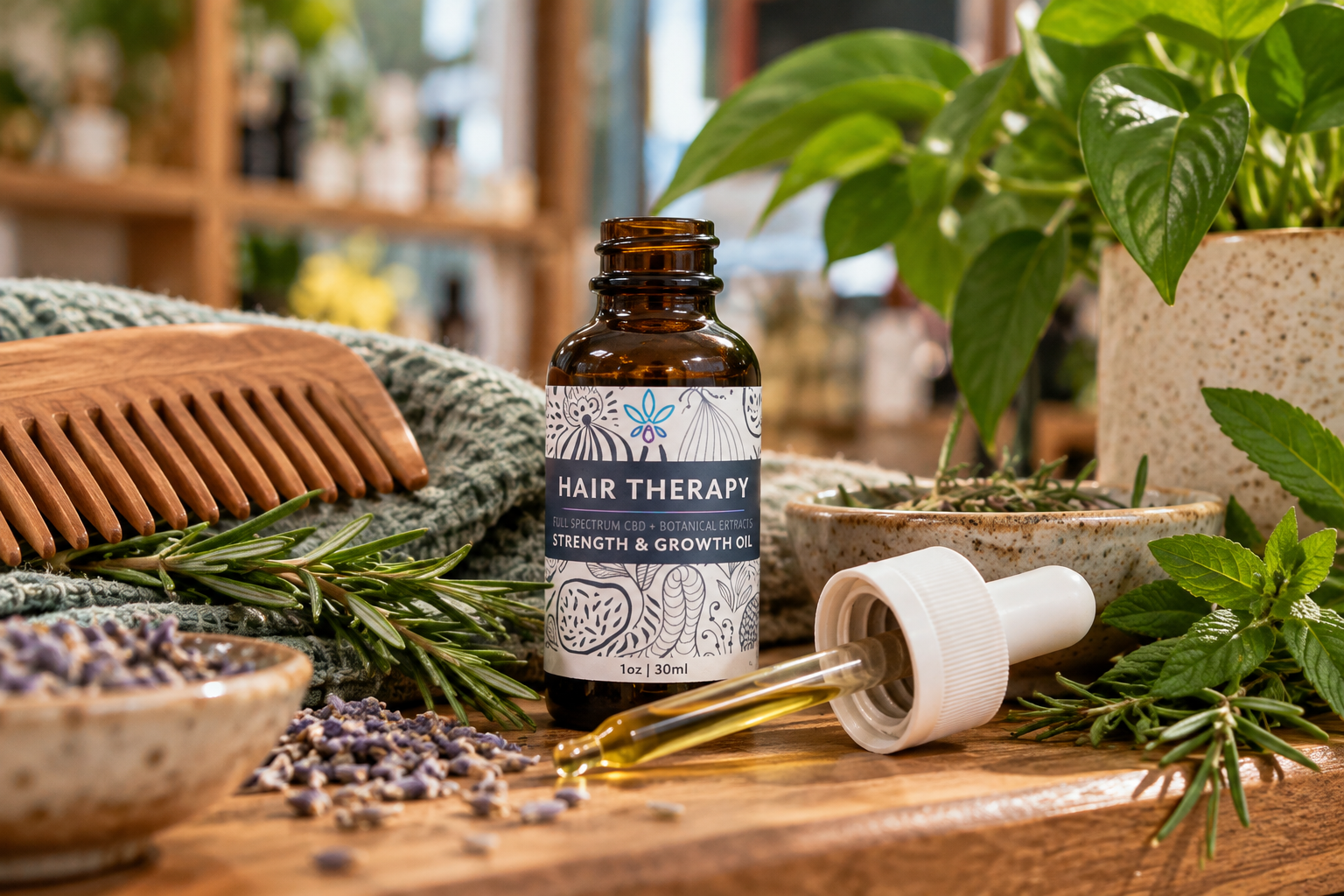
Hair Therapy botanical oil with dropper arranged with rosemary, lavender, a wooden comb, and natural greenery.
Final Thought
Good hair care does not have to be complicated.
Start with the basics:
Care for your scalp.
Protect your strands.
Use products that make sense for your hair type.
Be gentle.
Be consistent.
And if you enjoy botanical oils, let them be part of the ritual — not a miracle promise.