
THC vs. Delta-9: What’s the Difference? A Clear Guide to Hemp-Derived Cannabinoids
Posted by Cheryl Cryer on Jun 7th 2025
If you’ve ever looked at a hemp or cannabis label and wondered whether THC and Delta-9 are the same thing, you’re not alone.
The language around cannabinoids has become increasingly complicated. Delta-9. Delta-8. THCA. CBD. Full-spectrum. Hemp-derived. Cannabis-derived.
And because laws, manufacturing methods, and product formulations continue to change, understanding what those words actually mean matters.
At Urban Apothecary, we believe cannabinoid education should help you ask better questions — not make bigger promises.
Here’s a clearer look at the terminology, what to pay attention to on a label, and why sourcing and transparency matter.
First: What Does “THC” Mean?
THC is short for tetrahydrocannabinol, a family of cannabinoid compounds found in cannabis.
When people casually say “THC,” they are usually referring to Delta-9 THC, the primary intoxicating cannabinoid associated with cannabis. Delta-9 THC occurs naturally in the cannabis plant and is one of many cannabinoids the plant can produce.
So:
Delta-9 is a type of THC.
But not every cannabinoid labeled with “THC” is identical to Delta-9.
That distinction has become increasingly important as more hemp-derived cannabinoid products have entered the marketplace.
What Is Delta-9 THC?
Delta-9-tetrahydrocannabinol, commonly shortened to Delta-9 THC, is the primary psychoactive cannabinoid naturally found in cannabis.
It can be present in both cannabis commonly referred to as marijuana and cannabis legally classified as hemp.
The plant itself is the same species — Cannabis sativa — while legal definitions have historically depended largely on cannabinoid concentration and how the plant or finished product is classified under federal and state law.
This is one reason the phrase “hemp-derived Delta-9” can be confusing. The molecule is still Delta-9 THC; “hemp-derived” describes the legal/source framework from which it was produced.
What Is THCA?
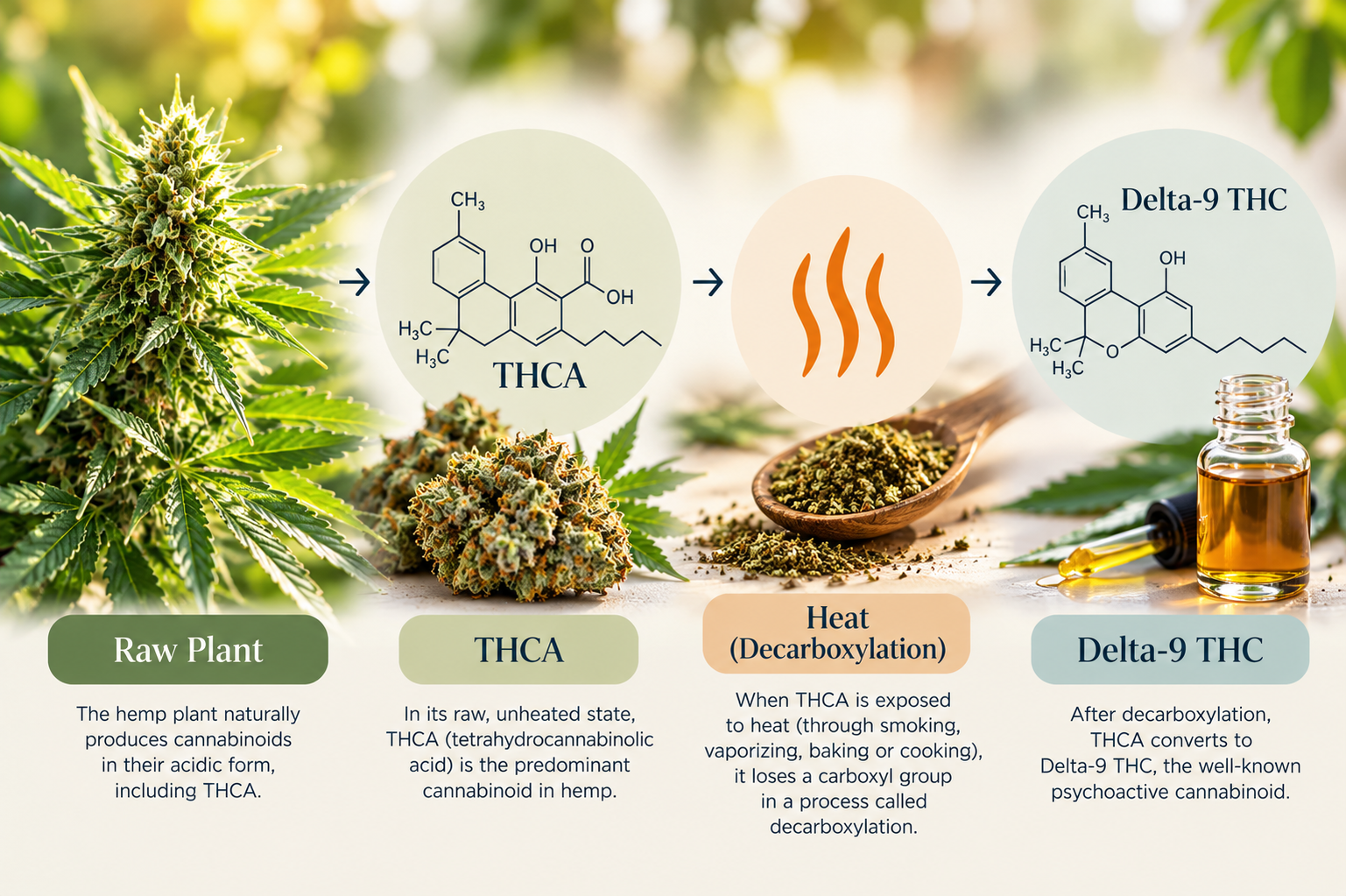
THCA, or tetrahydrocannabinolic acid, is a cannabinoid naturally present in raw cannabis.
Before heat is applied, much of the plant’s potential Delta-9 THC exists in this acidic form.
When THCA is heated, it can convert into Delta-9 THC through a process called decarboxylation.
That is why regulators increasingly look at total THC, rather than only the amount of Delta-9 THC already present at the moment of testing.
What About Delta-8 THC?
Delta-8 THC is another psychoactive cannabinoid.
It can occur naturally in cannabis, but generally in very small amounts. Because naturally occurring concentrations are low, many commercial Delta-8 products are manufactured by chemically converting hemp-derived CBD into Delta-8 THC.
That distinction matters.
It is more accurate to say:
Delta-8 can occur naturally, but many concentrated Delta-8 products on the market are produced through chemical conversion.
The FDA has raised concerns about Delta-8 products because they have not been evaluated or approved for safe use, product concentrations can vary, and some manufacturing methods may introduce unwanted by-products or contaminants if not carefully controlled and tested.
That does not mean every Delta-8 product is identical.
It does mean manufacturing transparency and testing matter.
“Natural” Does Not Automatically Mean “Safe”
One of the most important updates to our original article is this:
We do not recommend choosing a cannabinoid product simply because it is described as “natural.”
Cannabinoids can come from plants and still vary significantly in:
- concentration
- manufacturing method
- purity
- formulation
- potency
- contaminants
- labeling accuracy
- individual effects
Likewise, processing itself is not automatically bad.
Extraction, concentration, purification, and formulation are all forms of processing. What matters is how a product was made, what is actually in it, and whether the manufacturer can document that clearly.
At Urban Apothecary, we pay much more attention to source, formulation, testing, transparency, and consistency than to vague marketing words such as “natural.”
Full-Spectrum vs. Isolate: Another Important Distinction
Cannabinoid products can also differ in how much of the original plant profile remains in the finished extract.
A full-spectrum hemp extract retains a broader range of naturally occurring compounds from the plant, which may include cannabinoids, terpenes, and other plant constituents.
An isolate has been further refined to separate out a particular cannabinoid.
Neither term automatically tells you whether a product is high-quality.
They describe different ingredients and formulation approaches.
At Urban Apothecary, we have historically preferred thoughtfully sourced full-spectrum hemp extracts for many of our formulations because of our whole-plant herbalist approach.
But quality still depends on how the plant was grown, how the extract was produced, how the finished product was formulated, and whether appropriate testing is available.
For a deeper explanation, see our article:
Full-Spectrum vs. Isolate: Why Whole-Plant Hemp Matters
What Should You Look for in a Cannabinoid Product?
Instead of focusing only on whether something says “Delta-9,” “THC,” or “hemp-derived,” look at the entire product.
1. Clear cannabinoid amounts
The label should make it easy to understand what cannabinoids are present and how much is in the product.
Avoid products with vague phrases such as “proprietary cannabinoid blend” when they do not clearly disclose what that means.
2. Third-party laboratory testing
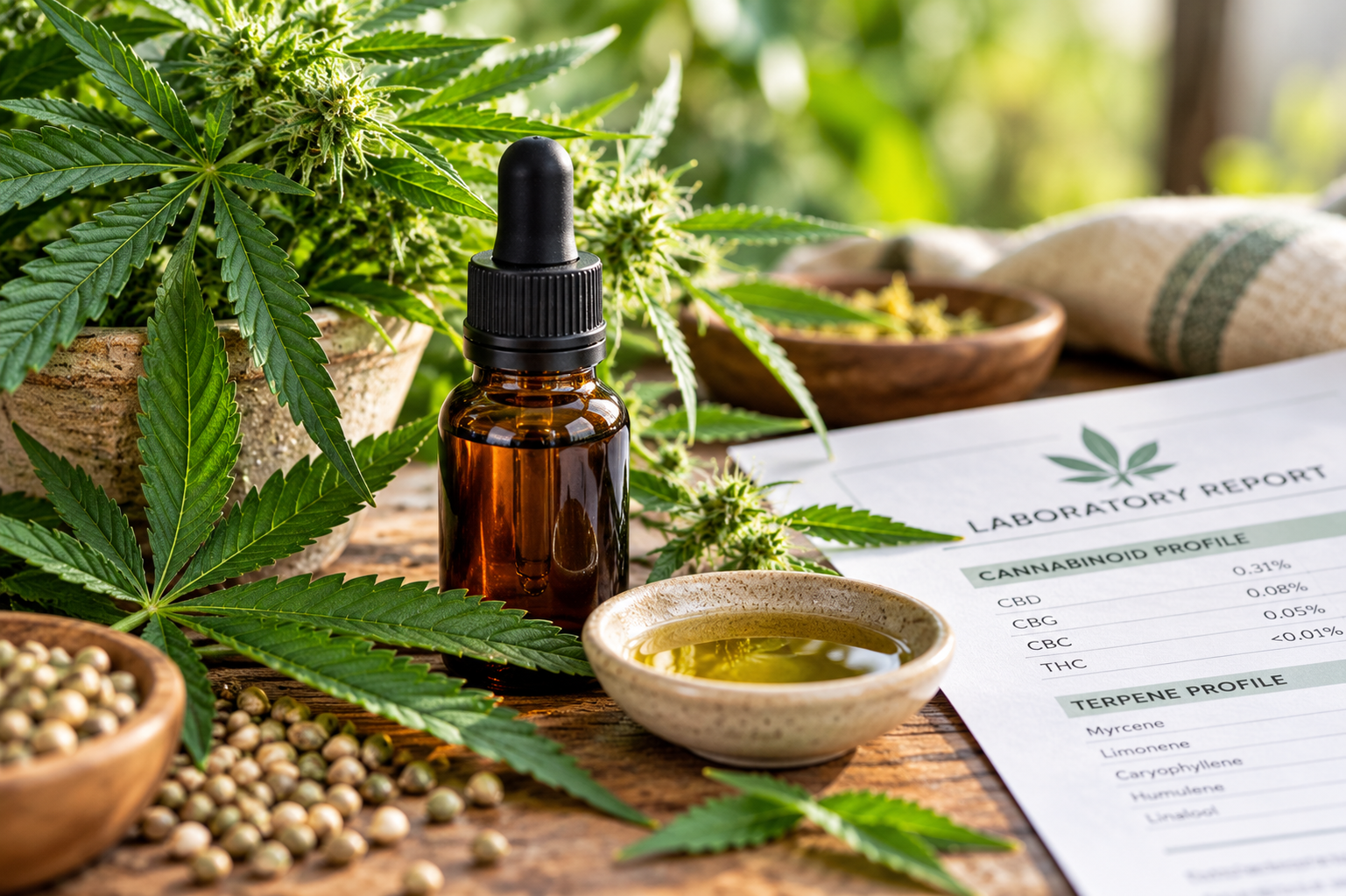
Look for a current Certificate of Analysis (COA) from an independent laboratory.
Depending on the product, testing may include:
- cannabinoid potency
- pesticides
- heavy metals
- residual solvents
- microbial contaminants
A COA should match the product or batch you are purchasing.
3. Transparent sourcing
A reputable company should be able to explain:
- where the hemp was grown
- who produced the extract
- what extraction or conversion process was used
- what testing was performed
- how the finished product was formulated
4. Realistic marketing
Be cautious when a cannabinoid product claims to cure, treat, prevent, or fix a medical condition.
The FDA continues to caution that unapproved cannabis-derived products should not be marketed with unproven medical claims.
5. Responsible packaging
Intoxicating cannabinoid products should be clearly labeled and stored away from children and pets.
Products that look like familiar candy, snacks, or children’s food deserve extra scrutiny.
Hemp Law Is Changing in 2026
This is another reason we are updating this article.
Under the federal framework established by the 2018 Farm Bill, hemp has been defined primarily by a limit of 0.3% Delta-9 THC on a dry-weight basis.
That federal definition is scheduled to change on November 12, 2026.
Under the new federal language, hemp will instead be evaluated using total THC, including THCA, and the law also creates new restrictions for hemp-derived cannabinoid products, including cannabinoids manufactured outside the plant and finished products exceeding specified total THC limits.
The new federal definition includes a limit of 0.4 milligrams combined total THC and other cannabinoids with similar effects per final-product container.
There are also ongoing legislative efforts that could modify or delay portions of these changes, so this remains an evolving area of federal policy.
What does that mean for consumers?
The labels and categories you see today may not look the same in the future.
For businesses like Urban Apothecary, changes in federal and state rules may affect:
- sourcing
- formulation
- testing
- packaging
- labeling
- product availability
We continue to follow these developments closely.
For our most current updates, visit our Protect Access to Hemp Wellness page.
protect-access-to-hemp-wellness
A Note About Individual Safety
Cannabinoids affect people differently.
Factors such as formulation, amount used, individual sensitivity, medications, other supplements, alcohol use, pregnancy or breastfeeding, and underlying health considerations can all matter.
The FDA specifically advises against THC and CBD use during pregnancy and breastfeeding and notes potential drug-interaction and safety concerns with cannabis-derived compounds.
If you take prescription medications, have a medical condition, are pregnant or breastfeeding, or are unsure whether a cannabinoid product fits your situation, talk with an appropriate healthcare professional.
And remember:
More is not necessarily better.
With cannabinoid products, clear labeling, responsible use, and knowing what you are actually purchasing matter.
Our Approach at Urban Apothecary
As herbalists and formulators, we tend to look at hemp through a whole-plant lens.
But “whole plant” does not replace quality control.
For us, responsible hemp wellness means asking questions about:
- how the plant was grown
- how the extract was produced
- what the finished formula contains
- whether it has been independently tested
- whether the label clearly communicates potency
- whether customers have enough information to make an informed choice
The cannabinoid marketplace has changed dramatically in a relatively short period of time.
Our role is not to tell you that one buzzword automatically makes a product good or bad.
Our role is to help make the information easier to understand.
Final Thought: Know What You’re Choosing
So, is THC the same thing as Delta-9?
Usually, when people say “THC,” they mean Delta-9 THC — but THC is a broader family of related compounds.
THCA is a naturally occurring precursor that can convert to Delta-9 THC when heated.
Delta-8 also occurs naturally in very small amounts, although many concentrated commercial Delta-8 products are manufactured through conversion from CBD.
And as federal law continues to evolve, the distinction between plant source, cannabinoid type, manufacturing method, and finished-product composition is becoming even more important.
The takeaway is simple:
Read the label. Ask how it was made. Look for independent testing. Understand what you’re buying.
If you have questions about the hemp products we carry or how to read a cannabinoid label, stop into Urban Apothecary in downtown Batavia or book time to talk with us.
We’re always happy to help you ask better questions.