null Skip to main content
How to Choose a Quality CBD Oil: Full Spectrum vs. Isolate & What to Look For

How to Choose a Quality CBD Oil: Full Spectrum vs. Isolate & What to Look For

Posted by Cheryl Cryer on Aug 14th 2026

January 1, 2023 | Updated August 14, 2026

Not all CBD oils are the same. Learn how to compare full-spectrum and isolate CBD, understand concentration, evaluate ingredients and testing, and choose a quality CBD oil with greater confidence.


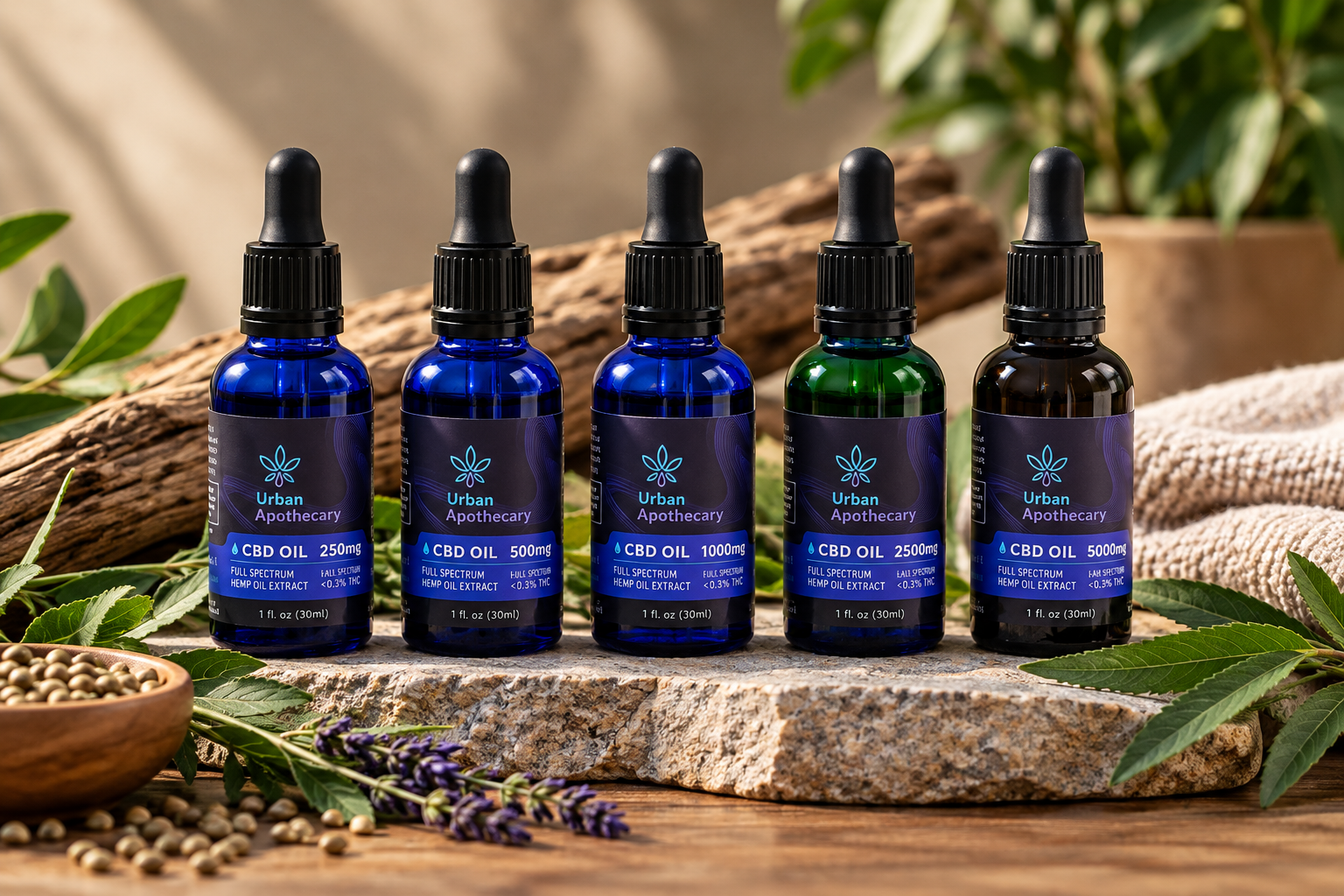
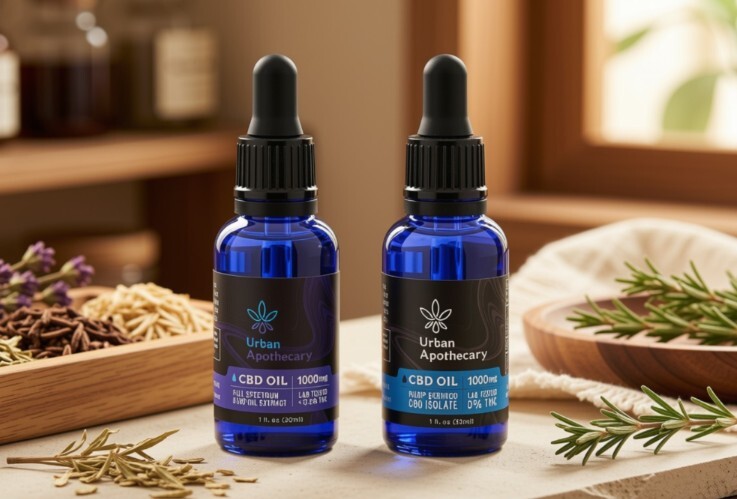
Full spectrum or isolate? Understanding what's actually in the bottle makes choosing CBD oil much easier.


Shopping for CBD oil should be simple.

But if you've ever compared bottles labeled full spectrum, CBD isolate, different milligram amounts, or different extraction methods—and wondered what any of that actually means—you're definitely not alone.

It's one of the questions we hear most often at Urban Apothecary:

“How do I know which CBD oil is right for me?”

The answer isn't simply choosing the bottle with the biggest number on the label.

A quality CBD oil comes down to a handful of things: what's actually in the bottle, where the hemp comes from, how it's made and tested, and which type of extract makes the most sense for you.

As a formulator and longtime hemp educator, I'm particular about what goes into the products we make and carry at Urban Apothecary.

Here's what I recommend looking at before choosing a CBD oil.

What Should You Look for When Buying CBD Oil?

Before comparing prices, look at these five things:

  • Whether the product is full spectrum, broad spectrum, or CBD isolate

  • The concentration of CBD in the product

  • Where and how the hemp was sourced

  • What else is included in the formula

  • Whether the finished product is independently lab tested

Those details tell you much more about a CBD oil than the number printed in large type on the front of the bottle.

Full Spectrum CBD vs. CBD Isolate: What's the Difference?

One of the first choices you'll encounter is whether to use full-spectrum CBD or CBD isolate.

They aren't simply different strengths of the same product.

They're different types of hemp extracts.

What Is Full-Spectrum CBD?

Full-spectrum hemp extract keeps CBD together with additional compounds naturally found in hemp, including other cannabinoids, terpenes, and flavonoids.

It can also contain trace amounts of THC.

I often explain full spectrum as the choice for someone who wants more of the original hemp plant represented in the finished oil.

Our Full Spectrum Hemp Extract – Organic CBD Oil combines full-spectrum hemp extract with organic MCT oil in a deliberately simple formulation. Our current product information also identifies the hemp as Colorado-grown and sourced from a U.S. Hemp Authority™ certified grower and processor.

Full spectrum may be worth considering if:

  • You prefer a whole-plant hemp extract

  • You're comfortable with trace amounts of THC

  • You value a simple ingredient list

  • You don't mind hemp's naturally earthy character

If THC terminology has you confused, you're not alone. Our guide THC vs. Delta-9: What's the Difference and Why It Matters for Natural Wellness explains some of the terminology you'll encounter when shopping for hemp-derived products.

What Is CBD Isolate?

CBD isolate takes a different approach.

Instead of retaining the wider range of compounds found in a full-spectrum hemp extract, CBD is separated from the other cannabinoids and plant compounds.

That makes isolate particularly appealing to people who specifically want CBD without THC.

Our CBD Isolate Oil Drops combine hemp-derived CBD isolate with organic MCT oil. The current formulation is flavorless, odorless, third-party tested, and contains no detectable Delta-9 THC.

CBD isolate may be a better fit if:

  • You specifically want to avoid THC

  • You're sensitive to full-spectrum products

  • You dislike hemp's earthy flavor

  • You prefer a flavorless and odorless oil

  • You want a straightforward CBD formulation

Neither option is automatically “better.”

The better question is:

Which type of CBD oil better matches what you're looking for?

Full spectrum retains a broader hemp profile, while CBD isolate provides an option for customers looking to avoid THC.


Is Full-Spectrum CBD Better Than CBD Isolate?

There's a lot of confident language online claiming that one form of CBD is always better than another.

I don't think that's the most helpful way to choose.

Full spectrum and isolate simply offer different cannabinoid profiles.

Full spectrum retains more of the compounds naturally present in hemp.

Isolate provides CBD without the additional cannabinoids found in full-spectrum extract.

For some customers, that makes full spectrum their preference.

For others, avoiding THC is much more important.

That's one reason Urban Apothecary offers more than one type of CBD oil.

Wellness isn't one-size-fits-all, and neither is CBD.

You can compare the options currently available in our Oil Drops & Tinctures collection.

Understanding CBD Oil Concentration: What Do the Milligrams Mean?

This is another place where CBD shopping can become confusing.

CBD oils are sold in different concentrations, and you'll typically see a milligram amount prominently displayed on the product.

That number helps describe how much CBD is contained in the product.

What it doesn't tell you is whether one oil is automatically higher quality—or whether the bottle with the biggest number is automatically the best choice for you.

When you're comparing CBD oils, consider:

  • Total CBD in the product

  • Bottle size

  • Serving information on the label

  • Type of hemp extract

  • Ingredients

  • Hemp sourcing

  • Third-party testing

Urban Apothecary offers Full Spectrum Hemp Extract in select concentrations, with the current available options always shown on the product page.

That distinction matters.

Our product selection may evolve over time as the hemp industry, regulations, sourcing, and customer preferences change. Rather than building this guide around a list of strengths that may eventually become outdated, the better lesson is this:

A bigger milligram number doesn't automatically mean a better CBD oil.

Quality, transparency, formulation, and understanding what you're buying matter too.

CBD concentration is only one part of choosing an oil. Ingredients, sourcing, formulation, and testing matter too.


Don't Judge CBD Oil by Milligrams Alone

Imagine two CBD oils with the same milligram amount printed on the bottle.

That doesn't necessarily mean they're equivalent products.

One may come with clearly identified hemp sourcing, a short ingredient list, accessible testing information, and a company willing to answer questions.

The other may leave you wondering where the hemp came from or what's actually in the bottle.

That's why I encourage people to look beyond potency.

Read the Ingredient List

CBD oil doesn't need to be complicated.

In fact, I generally prefer knowing exactly what's in the bottle and why it's there.

Our Full Spectrum Hemp Extract contains:

Full Spectrum Hemp Extract + Organic MCT Oil

Our CBD Isolate Oil Drops contain:

Organic MCT Oil + Hemp-Derived CBD Isolate

Those are the ingredient lists currently published on the respective product pages.

Simple.

Readable.

Understandable.

You shouldn't need a chemistry degree to figure out what's in your wellness routine.

Hemp Sourcing Matters

CBD doesn't begin in the bottle.

It begins with the plant.

That's one reason sourcing matters to us.

When you're comparing CBD products, consider asking:

  • Where was the hemp grown?

  • Does the company identify its source?

  • Are the ingredients clearly disclosed?

  • Does the company explain its quality standards?

  • Is there someone you can actually contact with questions?

Urban Apothecary's full-spectrum hemp is currently sourced from certified organic Colorado-grown hemp through a U.S. Hemp Authority™ certified grower and processor.

For us, transparency matters because we're not simply putting another product on a shelf.

We're choosing ingredients and formulations we're comfortable putting our name behind.

What About Extraction?

You'll also see CBD companies talking about extraction methods.

That's because hemp has to be processed before its cannabinoids become part of the oil in the bottle.

Urban Apothecary's current full-spectrum product information describes a solventless extraction process designed to retain the plant's broader cannabinoid, terpene, and flavonoid profile.

But here's the larger point:

Don't let impressive-sounding terminology replace transparency.

A company should be able to explain what it makes, what's in it, how it sources its ingredients, and how it verifies quality without hiding behind buzzwords.

Look for Third-Party Lab Testing

One of the most useful tools when comparing CBD products is independent laboratory testing.

You'll often hear the resulting document called a COA, or Certificate of Analysis.

A COA can provide information about a product's cannabinoid profile and help you evaluate whether what's in the finished product aligns with what you're expecting.

Urban Apothecary makes laboratory information available for multiple batches of our Full Spectrum CBD Oil and CBD Isolate products on our Premium CBD Oil & Lab Results page.

When you're comparing brands, don't rely exclusively on an attractive label or dramatic promises.

Look for transparency.

My general rule: if a CBD company won't tell you what's in its product, where it came from, or how it was tested, keep shopping.

Independent testing is one more way to understand what you're actually buying.


What If You Want to Avoid THC?

This is important.

Full-spectrum hemp extract can contain trace amounts of THC.

If avoiding THC matters because of personal preference, sensitivity, employment, athletic participation, or drug-testing requirements, don't assume that a full-spectrum CBD oil is “drug-test safe.”

Review the product information and current testing.

For customers specifically looking for a THC-free formulation, our CBD Isolate Oil Drops are currently formulated with no detectable Delta-9 THC.

If a positive drug test could have serious employment, athletic, or legal consequences for you, be especially cautious with hemp-derived products.

What About Broad-Spectrum CBD?

You'll also encounter products labeled broad spectrum.

Broad-spectrum CBD generally sits somewhere between full spectrum and isolate: it can retain multiple hemp compounds while being processed to remove THC.

Urban Apothecary's primary oil choices focus on full-spectrum hemp extract and CBD isolate.

That gives customers a fairly straightforward starting point:

Want a broader hemp profile and are comfortable with trace THC? Explore full spectrum.

Want CBD without detectable THC? Explore isolate.

Be Cautious With Big CBD Promises

This is one area where I believe the hemp industry can do better.

A quality product doesn't need to promise that it will fix everything that's bothering you.

CBD can interact with certain medications, and the FDA continues to note unanswered safety questions surrounding consumer CBD use. The agency also advises against CBD use during pregnancy and breastfeeding.

If you're taking prescription medications, managing a medical condition, pregnant, breastfeeding, or considering CBD for a child, talk with a qualified healthcare professional before adding CBD to your routine.

You can read more directly from the FDA in its consumer information about products containing cannabis and CBD.

CBD wellness products should not be viewed as substitutes for medical care or prescribed treatment.

Good wellness education should help you make a thoughtful decision.

It shouldn't scare you into buying something—or promise you a miracle.

So, Which CBD Oil Should You Choose?

Here's the simplest way I explain the difference when someone asks me in the shop.

Choose Full Spectrum If...

You prefer a broader hemp extract and are comfortable with naturally occurring trace amounts of THC.

Explore Urban Apothecary Full Spectrum Hemp Extract

Choose CBD Isolate If...

You specifically want a THC-free option, are sensitive to full-spectrum extracts, or prefer a flavorless and odorless formulation.

Explore Urban Apothecary CBD Isolate Oil Drops

Want to Compare What's Available?

Our assortment may change over time, so the easiest way to see current formulations and concentrations is to browse our:

Oil Drops & Tinctures Collection

Still Not Sure? Come Talk to Us.

Sometimes another article isn't what you need.

Sometimes you just need to talk to a real person and say:

“Here's what I'm looking for. Can you help me understand my options?”

That's part of what an apothecary should be.

Urban Apothecary is a modern herbal shop in downtown Batavia, Illinois, where customers can explore plant-based wellness products and ask questions in person.

If you're local to Batavia, Geneva, St. Charles, or the surrounding Fox Valley area, come visit us.

Find Urban Apothecary in Downtown Batavia

Still have questions? We can meet with you virtually or visit us Urban Apothecary in downtown Batavia.


Because buying CBD shouldn't feel like guessing.

Know what's in the bottle. Understand your options. Choose with confidence.

Shop Urban Apothecary Oil Drops & Tinctures

Frequently Asked Questions About Choosing CBD Oil

What should I look for when choosing a CBD oil?

Start with the type of extract, CBD concentration, ingredient list, hemp sourcing, company transparency, and independent testing.

Don't choose a CBD oil based on price or milligrams alone.

What's the difference between full-spectrum CBD and CBD isolate?

Full-spectrum hemp extract contains CBD along with additional compounds naturally present in hemp and can contain trace amounts of THC.

CBD isolate separates CBD from the other cannabinoids and plant compounds.

Does full-spectrum CBD contain THC?

It can.

Urban Apothecary's current Full Spectrum Hemp Extract product information identifies it as containing less than 0.3% THC.

If avoiding THC is important to you, review current product information and laboratory testing carefully.

Does CBD isolate contain THC?

CBD isolate is processed to separate CBD from the other cannabinoids.

Urban Apothecary's current CBD Isolate Oil Drops are formulated with no detectable Delta-9 THC.

Is higher-milligram CBD oil better?

Not necessarily.

The milligram amount tells you about the CBD contained in the product, but it doesn't tell you everything about the quality of the hemp, ingredients, extraction, testing, or whether that particular product makes sense for you.

Why doesn't this guide recommend a specific CBD strength?

Because CBD products, available concentrations, regulations, and individual circumstances can change.

Rather than turning this article into a dosing chart that quickly becomes outdated, we believe it's more useful to teach you how to evaluate the product itself.

Current concentrations are always listed on the individual product page.

How do I know whether a CBD company is trustworthy?

Look for:

  • Clearly identified ingredients

  • Transparent hemp sourcing

  • Independent testing

  • Accessible product information

  • Realistic claims

  • A company willing to answer questions

Urban Apothecary customers can also view available CBD laboratory results here.

Where can I compare Urban Apothecary CBD oils?

Browse our current Oil Drops & Tinctures collection to see the formulations and concentrations presently available.

More From Urban Apothecary

Confused about cannabinoid terminology?

Read THC vs. Delta-9: What's the Difference and Why It Matters for Natural Wellness.

Want to see our testing information?

Visit Our Premium CBD Oil & Lab Results.

Ready to see what's currently available?

Shop Urban Apothecary Oil Drops & Tinctures.

Prefer to talk with someone in person?

Book a {FREE} 30 min call:
https://calendly.com/urbanapothecary/30min or Visit Urban Apothecary in Downtown Batavia, Illinois.

Urban Apothecary believes informed customers make better wellness decisions. CBD products are not intended to diagnose, treat, cure, or prevent disease. If you take medications or have questions about whether CBD is appropriate for you, consult a qualified healthcare professional.